Claim declined as a bilateral condition?
Updated · 8 sources, each linked below with the date we read it
Check it against your records, free
- Add the letter and your pet's vet records.
- We test the note they used against your records and PDS.
- See how strong your appeal looks in about 2 minutes.
Free · No card · Appeal packet A$69 only if it's worth sending. Nothing worth appealing? Your full report is free.
How insurers word it
- Medibank's PDS update effective 17 July 2024 says a bilateral condition of a pre-existing condition is itself pre-existing. Check that the old note was really the same condition on the other side.Source: Medibank, Update to the PDS dated 30 Aug 2023 (Pet Protect, Pet Plus, Pet Max), effective 17 July 2024, read 26 November 2026
- Everyday Pet Insurance's pre-existing definition includes a bilateral condition of a pre-existing condition.Source: Woolworths, Everyday Pet Insurance: pre-existing conditions update, read 26 November 2026
- Knose's pre-existing definition includes bilateral conditions. Check the definitions in your PDS before accepting an other-side exclusion.Source: Knose, Pet insurance FAQs and resources, read 26 November 2026
- Bupa's review form excludes cruciate ligament conditions from pre-existing review. Check the Bilateral Condition definition in your PDS for whether the other side is excluded.Source: Bupa, Pre-existing Condition exclusion review form, read 26 November 2026
- Bow Wow Meow's PDS defines bilateral and related conditions. Check that definition in the PDS for your policy start date.Source: Bow Wow Meow, PDS: accident and illness plans, read 26 November 2026
- The RSPCA Pet Insurance pages we read don't define a bilateral rule. Check the definitions in the PDS that applies to your policy start date.Source: RSPCA Pet Insurance, Frequently asked questions, read 26 November 2026
How to check your own records
- Find the first side. Find the first visit in your vet records that mentions the condition on either side, and note its date and which side.
- Compare it with your cover. Compare that date with your cover start date and the waiting periods in your PDS, including any cruciate period.
- Check it's the same condition. Make sure the earlier note is about the same condition. A note about a different problem in the other leg isn't the same condition.
- Find the definition. Find the bilateral definition in the PDS for your policy start date, and quote it in your complaint.
If you disagree
- AFCA says financial firms generally have up to 30 days to respond to a complaint. If the firm doesn't respond, can't resolve it, or you're unhappy with its answer, AFCA progresses it.Source: AFCA, What to expect: financial firm response times, read 26 November 2026
- AFCA says its service is free to the public.Source: AFCA, How AFCA can help, read 26 November 2026
Where bilateral decisions go wrong
- The first side's signs started after cover began, but the second side was still excluded.
- An old note about a different problem in the other leg was treated as the same condition.
- A definition from a newer PDS was applied to a policy that started under an older one.
- The claim is for an injury, not the condition the bilateral definition names.
Insurer guides: MedibankEveryday Pet InsuranceKnoseBupaGlossaryRules by insurer
More guides: Claim declined because of the waiting periodTemporary vs chronic pre-existing conditionsHow to dispute a declined pet insurance claimCan ChatGPT write my pet insurance complaint
Decision support only, not legal, veterinary or financial advice. You and your vet decide what to send. PetClaimCheck is a self-help tool for preparing your own appeal; it doesn't act for you or contact your insurer or AFCA. How we keep it accurate.
Check it free. Pay only for the packet you send
- Free check: how strong your appeal looks, and how many points you could raise
- Appeal packet: five documents built from your own records, ready to check and send
- If they say no: the AFCA letter is already included
- Checked: every quote and date matched to your files. Not a chatbot's guess
Nothing worth appealing? It's free.If the check finds the exclusion likely applies, your full report unlocks at no cost.
Check my decision free →What you get for A$69
Replaces going through your records page by page, matching notes to the wording, and writing three letters from scratch.
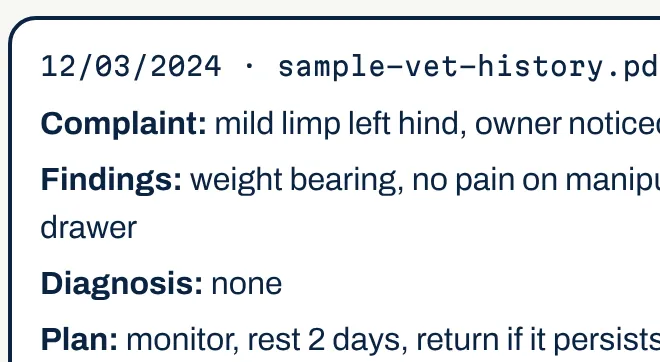 SampleDated timelineEvery vet visit in order, with its page numberInstead of going through your records page by page
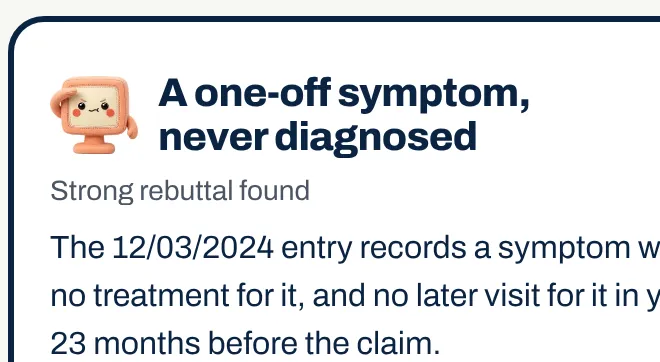 SampleEvery findingThe note they relied on, and each finding with the record line behind it (and the PDS wording, if you upload it)Instead of matching old notes to the wording yourself
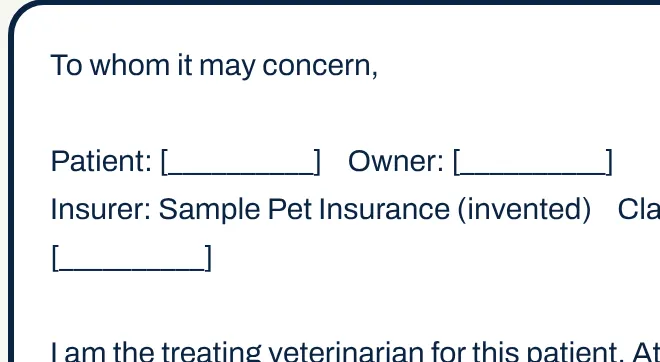 SampleVet letterOne page built from your vet's own notes, for them to check and signInstead of asking your vet to write one from scratch
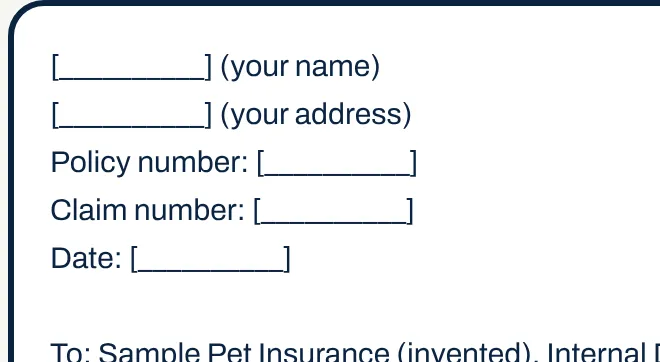 SampleYour complaint letterAddressed to your insurer, quoting their letter and your records, filled in from your documentsInstead of starting from a blank page
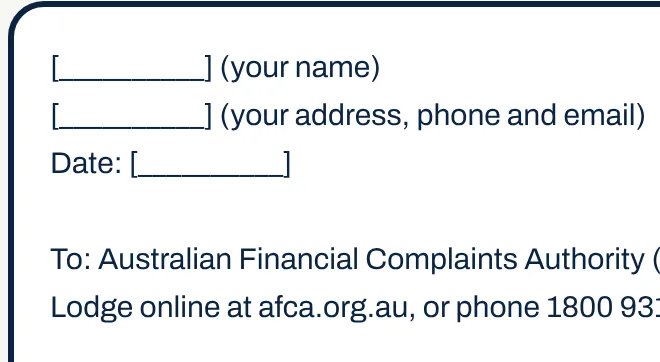 SampleIf they say noAn AFCA complaint letter and a checklist of what to sendInstead of working out where to go next
Pages from our sample packet: an invented claim, not a real pet, insurer or clinic.
Questions
Does every PDS have a bilateral rule?
Not every page we read sets one out. The PDS for your policy start date decides, so check its definitions before accepting the decision.
Which PDS applies to me?
Usually the one in force when your policy started or last renewed. Ask the insurer in writing which version it applied.
What does the free check look at?
It finds the first note on each side in your records, compares the dates with your cover and waiting periods, and checks the bilateral wording if you upload your PDS.