Pet Insurance Australia declined your pet's claim? How to challenge it
Updated · 5 sources, each linked below with the date we read it
Free · 2 minutes · No card · Appeal packet A$69
- Nothing worth appealing? Your full report is free.
- Pet Insurance Australia's own wording, and every quote checked against your records.
- Your files are deleted after 48 hours. No account needed.
 18 months without signs?Its rule for temporary conditionsCheck it
 ExampleA one-off symptom, never diagnosed“mild limp left hind”, no later visitRaise it
 The 6-month cruciate waitMay be waived · first sign vs the waitCheck it
Appeal packet: A$69 one-off. Nothing worth appealing? It's free.
See a sample appeal packet →Common traps in Pet Insurance Australia decisions
Our free check tests every one →- Raise it
A one-off symptom
A single symptom note ("mild limp", "occasional vomiting") treated as a diagnosed condition, when the records show no diagnosis or ongoing treatment.
The check tests whether the note they used was ever diagnosed, treated or seen again.
- Check it
It cleared up
A temporary condition that has been free of signs for longer than the period the PDS sets, still treated as excluded.
The check measures the clear time in your records against the period in the policy you upload.
- Raise it
A different body area
An old note about a different leg, organ or body system used to exclude an unrelated new problem.
The check compares the body area and side of the note with the claim.
- Raise it
A sudden new cause
A sudden injury (a fall, a swallowed object) treated as the same condition as an earlier, unrelated visit.
The check looks for a new event at the claim visit that the old note doesn't have.
- Check it
The other side
A bilateral exclusion applied without any recorded sign on the other side before cover started.
The check looks for any earlier sign on the other side.
- Free
Not sure which one it is?
The free check tests your letter and records against every one of these, in about 2 minutes.
Built from Pet Insurance Australia's own documents
Your check tests the note they used against these rules, word for word, and against your own vet records. A chatbot works from general knowledge, and won't show you which wording it used or when it was read.
- Pre-existing conditionsPet Insurance Australia · read 26 November 2026
- What to expect: financial firm response timesAFCA · read 26 November 2026
- How AFCA can helpAFCA · read 26 November 2026
Records show your dog was treated for a cruciate problem in 2024.✕ Not in your records
03/12/2024 · mild limp left hind · Diagnosis: none✓ Matched · records page 1
Every line in your packet is matched to the page it names in your files. If we can't find it, it isn't in your complaint.
Findings come from fixed rules, not a fresh opinion each time you ask. You see the rule, the record line and the page it's on.
Takes 2 minutes · No account · No cardAppeal packet A$69 onceNothing worth appealing? It's free
How Pet Insurance Australia defines a pre-existing condition
- Pet Insurance Australia says a pre-existing condition is one that existed or occurred before the commencement date of your first policy period, and that you or a reasonable person in your circumstances would have been aware of, whether or not it was diagnosed.Source: Pet Insurance Australia, Pre-existing conditions, read 26 November 2026
Temporary and cured conditions
- It says a temporary condition, one that normally resolves with treatment, stops being pre-existing if it hasn't shown signs in the 18-month period before the claim treatment date.Source: Pet Insurance Australia, Pre-existing conditions, read 26 November 2026
- Your vet needs to certify and provide records showing the condition is temporary and hasn't shown signs for 18 months. Cruciate ligament conditions, IVDD, hip and elbow dysplasia, patella luxation, endocrine diseases and other chronic conditions aren't temporary.Source: Pet Insurance Australia, Pre-existing conditions, read 26 November 2026
Bilateral conditions
- The Pet Insurance Australia page we read doesn't define a bilateral rule. Check your PDS before accepting an other-side exclusion.Source: Pet Insurance Australia, Pre-existing conditions, read 26 November 2026
Waiting periods
- Pet Insurance Australia says there's a 6-month waiting period for cruciate ligament claims, which it may waive at its discretion.Source: Pet Insurance Australia, Pre-existing conditions, read 26 November 2026
- Policies first taken out on or after 8 May 2023 are issued by PetSure; earlier ones by The Hollard Insurance Company. Both are administered by PetSure.Source: Pet Insurance Australia, Pre-existing conditions, read 26 November 2026
Complaints and internal dispute resolution
- It says it reviews pre-existing conditions automatically when you claim, and you can also apply for a review using its Pre-existing Condition Review form. An exclusion isn't lifted unless it agrees in writing.Source: Pet Insurance Australia, Pre-existing conditions, read 26 November 2026
- PetSure's complaints process has three steps and acknowledges escalated complaints within one business day.Source: PetSure, Complaints process, read 26 November 2026
Escalating to AFCA
- AFCA says financial firms generally have up to 30 days to respond to a complaint. If the firm doesn't respond in that time, can't resolve it, or you're unhappy with its answer, AFCA moves your complaint to the next stage.Source: AFCA, What to expect: financial firm response times, read 26 November 2026
- If you've already been through the insurer's internal dispute resolution, AFCA asks you to complain within two years of its IDR response.Source: AFCA, How AFCA can help, read 26 November 2026
- For most complaints the other limit is six years from when you first became aware, or should reasonably have become aware, of the loss. Whichever date comes first applies, and AFCA can extend the limits in special circumstances.Source: AFCA, The complaint process and time limits, read 26 November 2026
How to appeal a Pet Insurance Australia decision
- Find the note. Find the exact note and date the decision relies on, and the page it's on in your vet records.names the note, with its date and page
- Compare. Compare it with the claimed condition and Pet Insurance Australia's own wording: diagnosis, cure period, body area, side and dates.every finding, with the record line and wording behind it
- Vet letter. Ask your treating vet to review and sign a short, factual letter based on the clinic's own records.the vet letter, built from their own notes
- Internal dispute resolution. Lodge a written complaint with Pet Insurance Australia and ask for internal dispute resolution.the complaint letter, filled in
- Escalate. If it isn't resolved, take it to AFCA within its time limits.the AFCA letter and a checklist
Guides: How to dispute a declined pet insurance claimCan ChatGPT write my pet insurance complaint
In the news: AFCA complaints hit a record. Here's how a declined pet insurance claim gets heard
Decision support only, not legal, veterinary or financial advice. You and your vet decide what to send. PetClaimCheck is a self-help tool for preparing your own appeal; it doesn't act for you or contact your insurer or AFCA. How we keep it accurate.
Check it free. Pay only for the packet you send
- Free check: how strong your appeal looks, and how many points you could raise
- Appeal packet: five documents built from your own records, ready to check and send
- If they say no: the AFCA letter is already included
- Checked: every quote and date matched to your files. Not a chatbot's guess
Nothing worth appealing? It's free.If the check finds the exclusion likely applies, your full report unlocks at no cost.
Check my Pet Insurance Australia decision freeCheck my decision free →What you get for A$69
Replaces going through your records page by page, matching notes to the wording, and writing three letters from scratch.
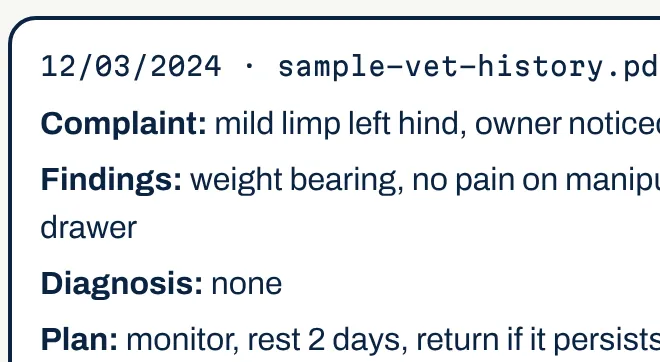 SampleDated timelineEvery vet visit in order, with its page numberInstead of going through your records page by page
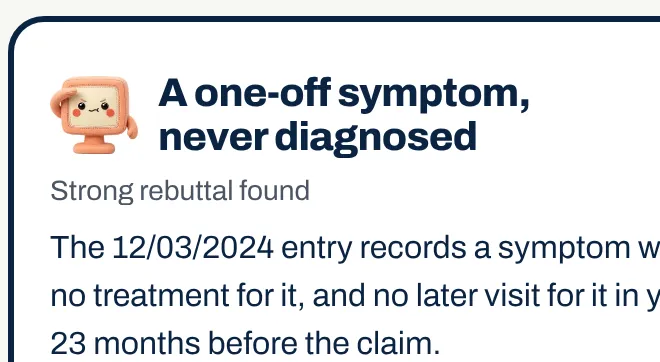 SampleEvery findingThe note they relied on, and each finding with the record line behind it (and the PDS wording, if you upload it)Instead of matching old notes to the wording yourself
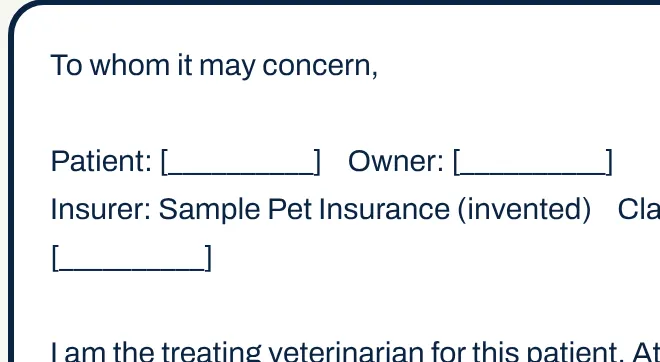 SampleVet letterOne page built from your vet's own notes, for them to check and signInstead of asking your vet to write one from scratch
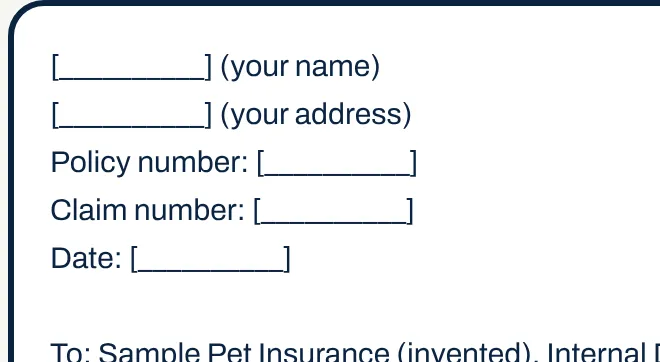 SampleYour complaint letterAddressed to Pet Insurance Australia, quoting their letter and your records, filled in from your documentsInstead of starting from a blank page
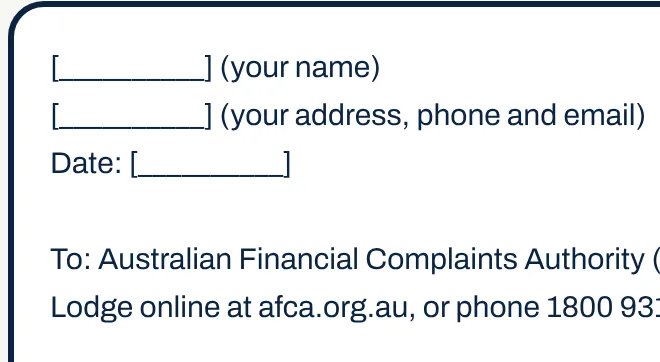 SampleIf they say noAn AFCA complaint letter and a checklist of what to sendInstead of working out where to go next
Pages from our sample packet: an invented claim, not a real pet, insurer or clinic.
Quick questions, sourced answers
Answers come only from insurers' own pages, regulators and our FAQ, with sources. Decision support, not legal advice. We don't keep what you type.
Questions
Can a pre-existing exclusion be lifted?
For a temporary condition, yes: Pet Insurance Australia says it stops being pre-existing after 18 months with no signs before the treatment date, certified by your vet. Chronic and listed conditions stay excluded.
Is cruciate damage covered?
Cruciate ligament conditions aren't temporary conditions under its rule, and there's a 6-month cruciate waiting period. A first sign after that period isn't caught by the waiting period.
When can I go to AFCA?
After the insurer has had the chance to respond. AFCA says firms generally have up to 30 days. The time limits are set out above.