MetLife Pet denied your pet's claim as pre-existing? How to appeal
Updated · 5 sources, each linked below with the date we read it
Free · 2 minutes · No card · Appeal packet US$49
- Nothing worth appealing? Your full report is free.
- MetLife Pet's own wording, and every quote checked against your records.
- Your files are deleted after 48 hours. No account needed.
 MetLife's 14-day illness waitFirst sign vs the end of the waiting periodCheck it
 ExampleA one-off symptom, never diagnosed“mild limp left hind”, no later visitRaise it
 Unrelated to the earlier incident?MetLife's rule for curable conditionsCheck it
Appeal packet: US$49 one-off. Nothing worth appealing? It's free.
See a sample appeal packet →- Raise it
A one-off symptom
A single symptom note ("mild limp", "occasional vomiting") treated as a diagnosis, when the records show no diagnosis or ongoing treatment.
The check tests whether the note they used was ever diagnosed, treated or seen again.
- Raise it
A different body area
An old note about a different leg, organ or body system used to exclude an unrelated new problem.
The check compares the body area and side of the note with the claim.
- Raise it
A sudden new cause
An injury from a sudden event (a fall, a swallowed object) treated as the same condition as an earlier, unrelated visit.
The check looks for a new event at the claim visit that the old note doesn't have.
- Check it
The waiting period
A waiting-period denial where the first sign in the records falls after the waiting period ended.
The check compares the first sign in your records with the waiting period in your documents.
- Check it
The other side
A bilateral exclusion applied without any recorded sign on the other side before cover started.
The check looks for any earlier sign on the other side.
- Check it
A new episode
A new, unrelated incident of a curable condition treated as the same episode as one before coverage.
The check looks for a clear gap and a new event between the visits.
Built from MetLife Pet's own pages
Your check tests the note they used against these rules, word for word, and against your own vet records. A chatbot works from general knowledge, and won't show you which wording it used or when it was read.
- MetLife Pet Insurance FAQsMetLife Pet · read November 26, 2026
- Pre-existing conditions and pet insuranceMetLife Pet · read November 26, 2026
- How do I file a complaint against my insurance company?NAIC · read November 26, 2026
Records show your dog was treated for a cruciate problem in 2024.✕ Not in your records
03/12/2024 · mild limp left hind · Diagnosis: none✓ Matched · records page 1
Every line in your packet is matched to the page it names in your files. If we can't find it, it isn't in your letter.
Findings come from fixed rules, not a fresh opinion each time you ask. You see the rule, the record line and the page it's on.
Takes 2 minutes · No account · No cardAppeal packet US$49 onceNothing worth appealing? It's free
How MetLife Pet defines a pre-existing condition
- MetLife Pet's FAQ says a pre-existing condition is an injury or illness that was contracted, manifested, diagnosed or treated before enrollment and/or the end of applicable waiting periods.Source: MetLife Pet, MetLife Pet Insurance FAQs, read November 26, 2026
- MetLife says you provide your pet's vet records with a claim so it can see the medical history and decide whether the treatment relates to a pre-existing condition.Source: MetLife Pet, Pre-existing conditions and pet insurance, read November 26, 2026
Cured conditions
- MetLife's FAQ says curable pre-existing conditions can typically be covered as long as the incident after enrollment is unrelated to the same incidents before coverage.Source: MetLife Pet, MetLife Pet Insurance FAQs, read November 26, 2026
- MetLife lists allergies, arthritis, cancer, diabetes, epilepsy, organ diseases, hip dysplasia and orthopedic conditions as examples of incurable conditions.Source: MetLife Pet, Pre-existing conditions and pet insurance, read November 26, 2026
Bilateral conditions
- MetLife says its policies can typically cover bilateral conditions as long as your pet's medical records don't show that one side was previously affected.Source: MetLife Pet, Pre-existing conditions and pet insurance, read November 26, 2026
Waiting periods
- MetLife Pet has a 0-day waiting period on accidents and a 14-day waiting period on illnesses.Source: MetLife Pet, Pre-existing conditions and pet insurance, read November 26, 2026
- MetLife Pet coverage is issued by Metropolitan General Insurance Company, and its policy is the governing document.Source: MetLife Pet, MetLife Pet Insurance FAQs, read November 26, 2026
Internal review
- The MetLife pages we read don't publish an appeal procedure. They point you to its pet advocates by phone, email or chat, and to your policy packet. Ask in writing and keep copies.Source: MetLife Pet, MetLife Pet Insurance FAQs, read November 26, 2026
Escalating to your state
- If you're unhappy with how a claim was handled, you can file a complaint with your state department of insurance. The NAIC's consumer guide lists unfair claim denials as a reason to complain.Source: NAIC, How do I file a complaint against my insurance company?, read November 26, 2026
- Each state's insurance department and its complaint page are listed in the NAIC's state directory.Source: NAIC, Insurance department contact information by state, read November 26, 2026
- Under the NAIC Pet Insurance Model Act, the insurer must prove that the pre-existing condition exclusion applies. It's a model law, so check whether your state has adopted it.Source: NAIC, Pet Insurance Model Act (Model #633), read November 26, 2026
How to appeal a MetLife Pet decision
- Find the note. Find the exact note and date the denial relies on, and the page it's on in your vet records.names the note, with its date and page
- Compare. Compare it with the claimed condition and MetLife Pet's own wording: diagnosis, cure period, body area, side and dates.every finding, with the record line and wording behind it
- Vet letter. Ask your treating vet to review and sign a short, factual letter based on the clinic's own records.the vet letter, built from their own notes
- Appeal in writing. Send a written appeal to MetLife Pet and keep a dated copy.the appeal letter, filled in
- Escalate. If the decision stands, file a complaint with your state insurance department.the state complaint letter and a checklist
Guides: How to appeal a pet insurance claim denialHow to file a pet insurance complaint with your stateCan ChatGPT write my pet insurance appeal
In the news: Your pet insurance went up. Before you switch, check what you'd lose
Decision support only, not legal, veterinary or financial advice. You and your vet decide what to send. PetClaimCheck is a self-help tool for preparing your own appeal; it doesn't act for you or contact your insurer or your state. How we keep it accurate.
Check it free. Pay only for the packet you send
- Free check: how strong your appeal looks, and how many points you could raise
- Appeal packet: five documents built from your own records, ready to check and send
- If they say no: the state complaint letter is already included
- Checked: every quote and date matched to your files. Not a chatbot's guess
Nothing worth appealing? It's free.If the check finds the exclusion likely applies, your full report unlocks at no cost.
Check my MetLife Pet denial freeCheck my denial free →What you get for US$49
Replaces going through your records page by page, matching notes to the wording, and writing three letters from scratch.
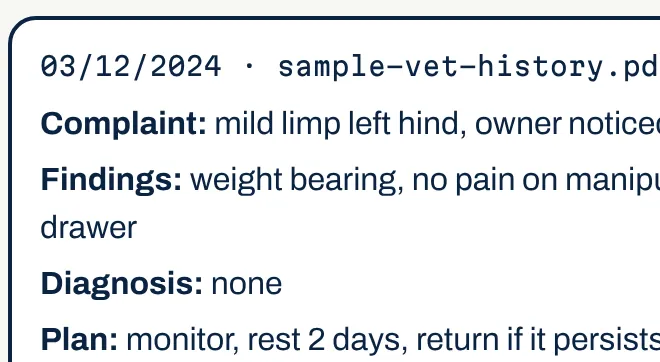 SampleDated timelineEvery vet visit in order, with its page numberInstead of going through your records page by page
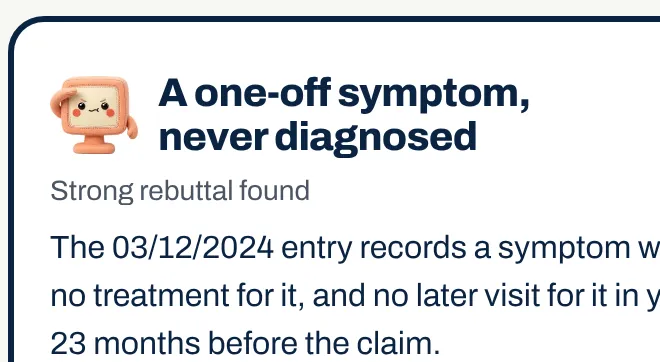 SampleEvery findingThe note they relied on, and each finding with the record line behind it (and the policy wording, if you upload it)Instead of matching old notes to the wording yourself
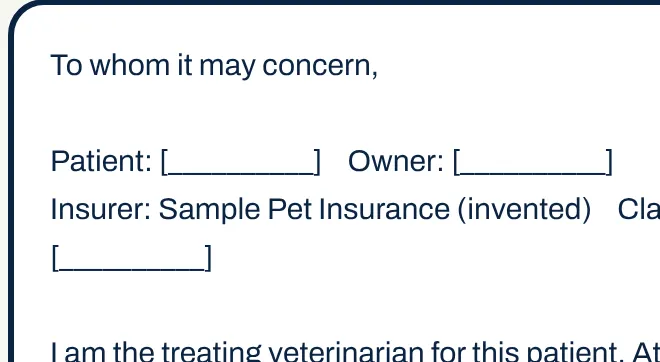 SampleVet letterOne page built from your vet's own notes, for them to check and signInstead of asking your vet to write one from scratch
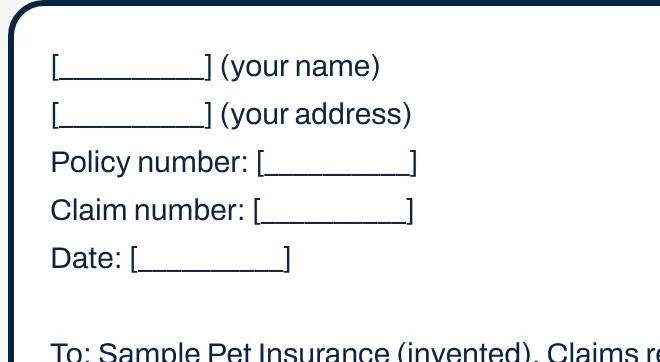 SampleYour appeal letterAddressed to MetLife Pet, quoting their letter and your records, filled in from your documentsInstead of starting from a blank page
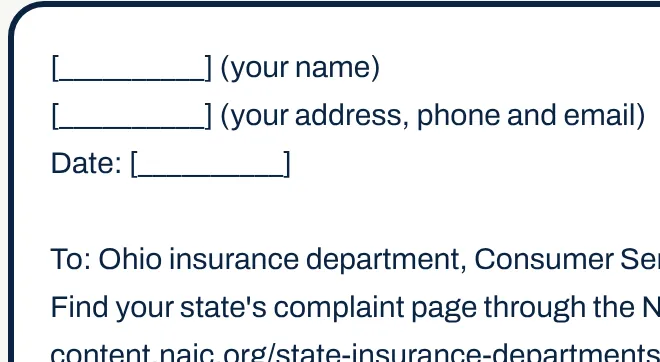 SampleIf they say noA complaint letter for your state insurance department and a checklist of what to sendInstead of working out where to go next
Pages from our sample packet: an invented claim, not a real pet, insurer or clinic.
Quick questions, sourced answers
Answers come only from insurers' own pages, regulators and our FAQ, with sources. Decision support, not legal advice. We don't keep what you type.
Questions
Does MetLife cover the other leg?
MetLife says it can typically cover bilateral conditions as long as the medical records don't show the other side was previously affected. If your records show nothing on the other side, say so.
Does MetLife cover a condition that cleared up?
Its FAQ says curable pre-existing conditions can typically be covered when the new incident is unrelated to the earlier ones. Your policy wording is what binds.
Can I complain to my state about a MetLife denial?
Yes. The NAIC says you can file a complaint with your state department of insurance if you think a claim was denied unfairly. The appeal packet includes a draft letter for your state.