Denied because it's a bilateral condition?
Updated · 7 sources, each linked below with the date we read it
Check it against your records, free
- Add the letter and your pet's vet records.
- We test the note they used against your records and policy.
- See how strong your appeal looks in about 2 minutes.
Free · No card · Appeal packet US$49 only if it's worth sending. Nothing worth appealing? Your full report is free.
How insurers word the rule
- Lemonade says that if one side of your pet's body shows signs of a bilateral condition before the policy starts, the same problem on the other side later counts as pre-existing.Source: Lemonade, Pet health conditions (bilateral conditions), read November 26, 2026
- Fetch says that for orthopedic bilateral conditions, a later problem on the other side is pre-existing and not covered. Its example is a cruciate tear.Source: Fetch, Pet insurance for pre-existing conditions: what Fetch covers, read November 26, 2026
- Embrace says that once a bilateral condition has shown on one side, a recurrence on the other side won't be covered. If a bilateral condition first develops after the waiting periods, it says both sides are covered.Source: Embrace, Pet insurance and pre-existing conditions, read November 26, 2026
- Healthy Paws says the cruciate ligament is the only bilateral exclusion in its policy. If one knee had cruciate surgery before enrollment, the other knee counts as pre-existing.Source: Healthy Paws, Pet insurance exclusions, read November 26, 2026
- The Figo pages we read don't set out a bilateral rule. Check your policy wording before accepting an other-side exclusion.Source: Figo, Pet insurance coverage (curable pre-existing, waiting periods, underwriter), read November 26, 2026
- The Pets Best page we read doesn't set out a bilateral rule. Check your policy wording before accepting an other-side exclusion.Source: Pets Best, Pre-existing condition coverage, read November 26, 2026
What the dates decide
- The NAIC Pet Insurance Model Act defines a pre-existing condition as one where, before the policy's effective date or during a waiting period, a veterinarian gave medical advice, the pet was treated, or verifiable sources show the pet had signs or symptoms directly related to the condition claimed.Source: NAIC, Pet Insurance Model Act (Model #633), read November 26, 2026
- Under the model act, the insurer has the burden of proving that the pre-existing condition exclusion applies. It's a model law, so check whether your state has adopted it.Source: NAIC, Pet Insurance Model Act (Model #633), read November 26, 2026
How to check your own records
- Find the first side. Find the first visit in your vet records that mentions the condition on either side, and note its date and which side.
- Compare it with your cover. Compare that date with your policy's effective date and its waiting periods, including any longer orthopedic period.
- Check the body area. Make sure the earlier note is about the same condition and the same joint. A note about a different leg problem isn't the same condition.
- Find the bilateral clause. Find the bilateral wording in your own policy. If there isn't one, ask the insurer in writing which clause it relied on.
Where bilateral denials go wrong
- The first side's signs started after cover began, but the second side was still excluded.
- An old note about a different problem in the other leg was treated as the same condition.
- A rule from another insurer's policy was assumed, when your policy has none or words it differently.
- The claim is for an injury, not the condition the bilateral rule names.
Insurer guides: LemonadeFetchEmbraceHealthy PawsGlossaryRules by insurer
More guides: What counts as a pre-existing condition in pet insuranceHow to appeal a pet insurance claim denialDenied because of the waiting periodDenied for a condition that was curedHow to file a pet insurance complaint with your stateCan ChatGPT write my pet insurance appeal
Decision support only, not legal, veterinary or financial advice. You and your vet decide what to send. PetClaimCheck is a self-help tool for preparing your own appeal; it doesn't act for you or contact your insurer or your state. How we keep it accurate.
Check it free. Pay only for the packet you send
- Free check: how strong your appeal looks, and how many points you could raise
- Appeal packet: five documents built from your own records, ready to check and send
- If they say no: the state complaint letter is already included
- Checked: every quote and date matched to your files. Not a chatbot's guess
Nothing worth appealing? It's free.If the check finds the exclusion likely applies, your full report unlocks at no cost.
Check my denial free →What you get for US$49
Replaces going through your records page by page, matching notes to the wording, and writing three letters from scratch.
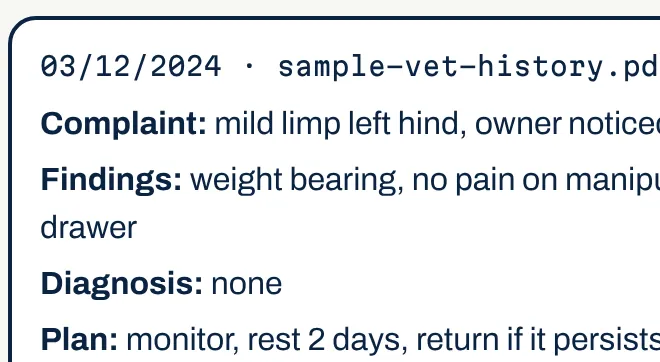 SampleDated timelineEvery vet visit in order, with its page numberInstead of going through your records page by page
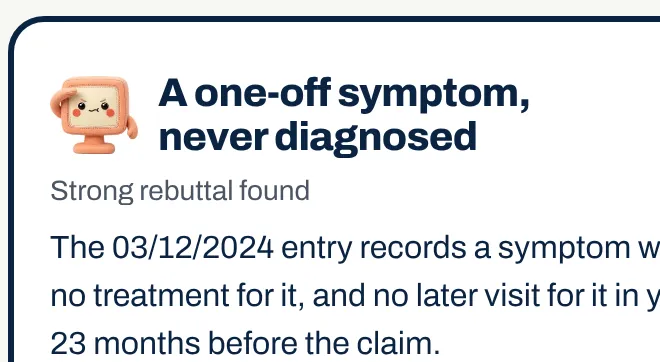 SampleEvery findingThe note they relied on, and each finding with the record line behind it (and the policy wording, if you upload it)Instead of matching old notes to the wording yourself
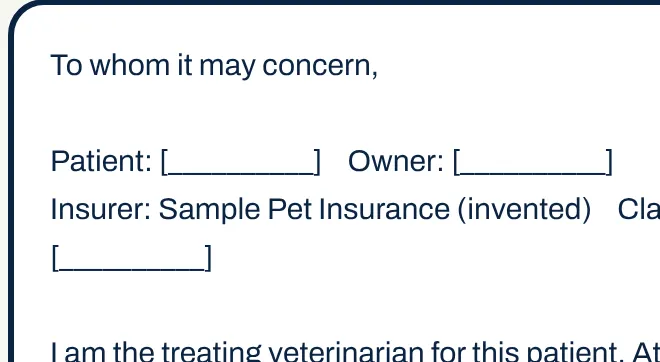 SampleVet letterOne page built from your vet's own notes, for them to check and signInstead of asking your vet to write one from scratch
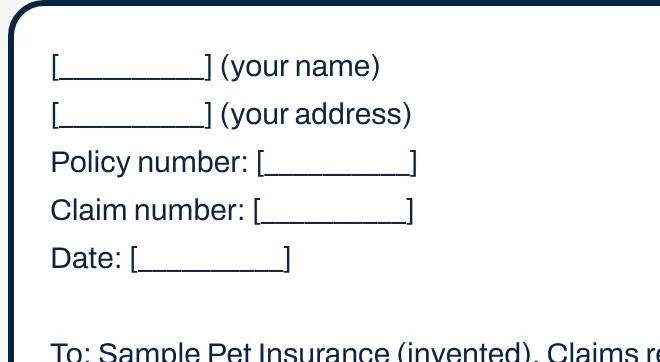 SampleYour appeal letterAddressed to your insurer, quoting their letter and your records, filled in from your documentsInstead of starting from a blank page
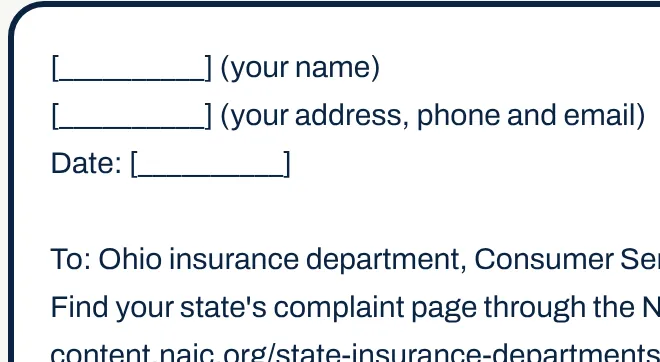 SampleIf they say noA complaint letter for your state insurance department and a checklist of what to sendInstead of working out where to go next
Pages from our sample packet: an invented claim, not a real pet, insurer or clinic.
Questions
Does every policy have a bilateral rule?
No. Some insurers set one out and some of the pages we read don't. Your own policy wording decides, so check it before accepting the denial.
What if the first knee went after my cover started?
Embrace, for example, says a bilateral condition that first develops after the waiting periods is covered on both sides. Check your own policy's wording and dates.
What does the free check look at?
It finds the first note on each side in your records, compares the dates with your cover and waiting periods, and checks the bilateral wording if you upload your policy.