Denied for a condition that was cured?
Updated · 8 sources, each linked below with the date we read it
Check it against your records, free
- Add the letter and your pet's vet records.
- We test the note they used against your records and policy.
- See how strong your appeal looks in about 2 minutes.
Free · No card · Appeal packet US$49 only if it's worth sending. Nothing worth appealing? Your full report is free.
Each insurer's cure rule
- Lemonade says curable conditions can become eligible for future cover if they stay completely resolved, with no recurring signs, symptoms or continued treatment, for at least 12 consecutive months.Source: Lemonade, Curable pre-existing conditions: the coverage conversation every vet should master, read November 26, 2026
- The same Lemonade page lists chronic conditions, joint and ligament issues and progressive diseases as permanently excluded.Source: Lemonade, Curable pre-existing conditions: the coverage conversation every vet should master, read November 26, 2026
- Embrace says a condition that has been symptom-free and treatment-free for 12 consecutive months may be covered if it comes back.Source: Embrace, Pet insurance and pre-existing conditions, read November 26, 2026
- Figo says it may cover pre-existing conditions considered curable if they show no signs or symptoms within 12 months of treatment.Source: Figo, Pet insurance coverage (curable pre-existing, waiting periods, underwriter), read November 26, 2026
- Pets Best says some conditions heal or are curable and need no further treatment, and that once healed or cured they're no longer considered pre-existing.Source: Pets Best, Pre-existing condition coverage, read November 26, 2026
- Nationwide's FAQ says members can request reviews of cured pre-existing conditions, and an exception may be added so the condition is covered.Source: Nationwide, Pet insurance coverage FAQs, read November 26, 2026
- The Trupanion pages we read don't describe a rule for covering a pre-existing condition once it's cured. Check your own policy wording.Source: Trupanion, What are pre-existing conditions, and how are they determined?, read November 26, 2026
Curable or chronic
- The NAIC Pet Insurance Model Act defines a chronic condition as one that can be treated or managed, but not cured.Source: NAIC, Pet Insurance Model Act (Model #633), read November 26, 2026
- Pets Best lists broken bones, lacerations, bruises, sprains, upper respiratory infections, dental fractures and pyometra as common curable pre-existing conditions.Source: Pets Best, Pre-existing condition coverage, read November 26, 2026
- Fetch's examples of curable conditions include urinary tract infections, upper respiratory infections and bite wounds.Source: Fetch, Pet insurance for pre-existing conditions: what Fetch covers, read November 26, 2026
How to count the months
- Find the cure rule. Find the cure or curable-condition wording in your policy, and the period it sets.
- Find the last sign. Find the last visit in your vet records that mentions signs of the old condition.
- Find the last treatment. Find the last date of treatment, including medication, for that condition.
- Count to the claim. Count the months from the later of those two dates to the visit you claimed for, and compare it with the policy's period.
Where cure denials go wrong
- A one-off infection or injury treated as chronic.
- A recheck visit with no signs counted as a recurrence.
- The months counted from the wrong date, such as the first sign instead of the last.
- A review of a cured condition never asked for, when the insurer offers one.
Insurer guides: LemonadeEmbraceFigoNationwideGlossaryRules by insurer
More guides: What counts as a pre-existing condition in pet insuranceHow to appeal a pet insurance claim denialDenied because of the waiting periodDenied because it's a bilateral conditionHow to file a pet insurance complaint with your stateCan ChatGPT write my pet insurance appeal
Decision support only, not legal, veterinary or financial advice. You and your vet decide what to send. PetClaimCheck is a self-help tool for preparing your own appeal; it doesn't act for you or contact your insurer or your state. How we keep it accurate.
Check it free. Pay only for the packet you send
- Free check: how strong your appeal looks, and how many points you could raise
- Appeal packet: five documents built from your own records, ready to check and send
- If they say no: the state complaint letter is already included
- Checked: every quote and date matched to your files. Not a chatbot's guess
Nothing worth appealing? It's free.If the check finds the exclusion likely applies, your full report unlocks at no cost.
Check my denial free →What you get for US$49
Replaces going through your records page by page, matching notes to the wording, and writing three letters from scratch.
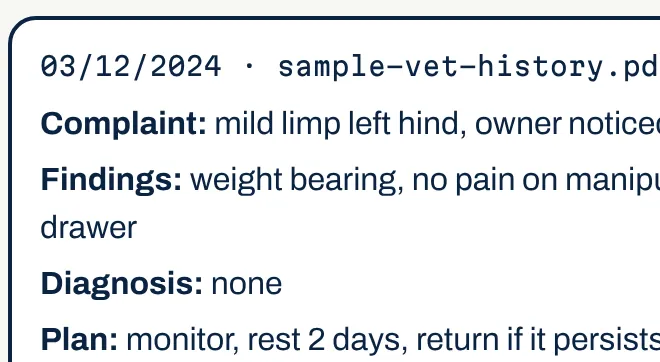 SampleDated timelineEvery vet visit in order, with its page numberInstead of going through your records page by page
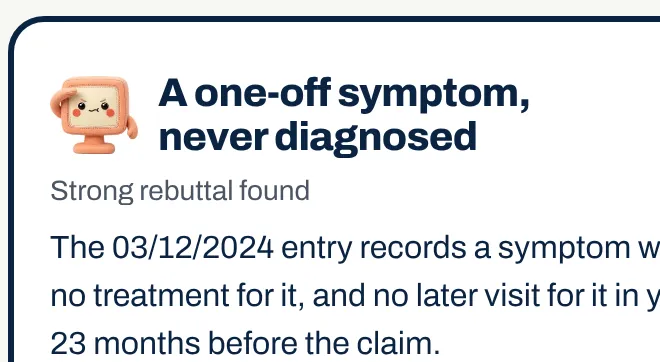 SampleEvery findingThe note they relied on, and each finding with the record line behind it (and the policy wording, if you upload it)Instead of matching old notes to the wording yourself
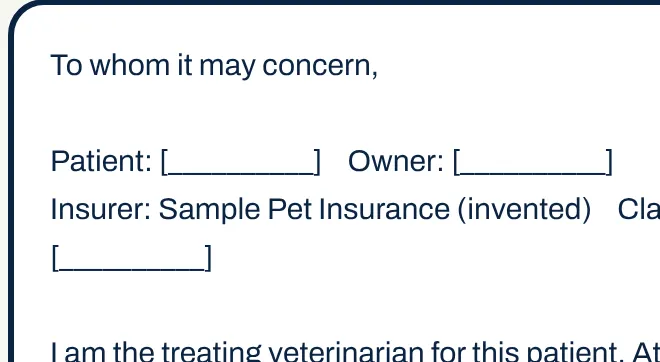 SampleVet letterOne page built from your vet's own notes, for them to check and signInstead of asking your vet to write one from scratch
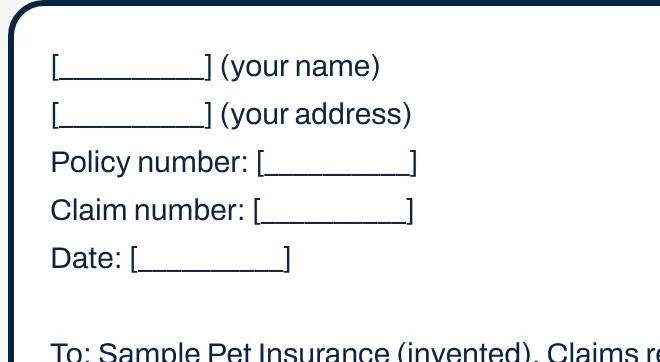 SampleYour appeal letterAddressed to your insurer, quoting their letter and your records, filled in from your documentsInstead of starting from a blank page
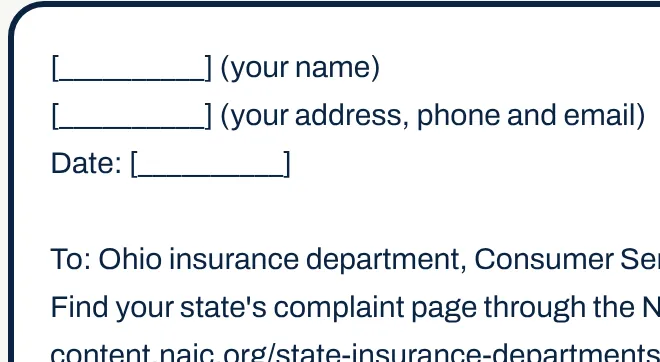 SampleIf they say noA complaint letter for your state insurance department and a checklist of what to sendInstead of working out where to go next
Pages from our sample packet: an invented claim, not a real pet, insurer or clinic.
Questions
Is 12 months the rule everywhere?
No. Several insurers we read use 12 months, but some set other periods or none. Your own policy wording decides.
Do I need my vet to say it was cured?
It helps. A short factual letter from the treating vet, based on the clinic's records, can confirm the last sign and last treatment dates. Your vet decides whether to sign it.
What does the free check look at?
It finds the last sign and last treatment in your records, counts the months to your claim, and checks your policy's cure wording if you upload it.