The new law puts the burden of proof on the insurer, caps waiting periods and protects covered conditions at renewal. Here's how to use it.
Key facts
- The Pet Insurance Act was approved on January 12, 2026 as Public Law 2025, Chapter 224.Source: Insurance Business, New Jersey passes pet insurance act, mandates industry compliance by 2027, read November 25, 2026
- The Act takes effect on the first day of the twelfth month after enactment, which puts the start at January 1, 2027.Source: New Jersey Legislature, P.L.2025, c.224: the Pet Insurance Act, read November 25, 2026
- Section 6a: the pet insurer has the burden of proving that the pre-existing condition exclusion applies to the condition for which a claim is being made.Source: New Jersey Legislature, P.L.2025, c.224: the Pet Insurance Act, read November 25, 2026
- Waiting periods for accidents are prohibited, and waiting periods for illnesses or orthopedic conditions not caused by an accident can't exceed 30 days.Source: New Jersey Legislature, P.L.2025, c.224: the Pet Insurance Act, read November 25, 2026
- A condition covered on a policy can't be considered pre-existing on any renewal, waiting periods can't be applied to renewals, and an insurer can't require a vet exam for a policy to renew.Source: New Jersey Legislature, P.L.2025, c.224: the Pet Insurance Act, read November 25, 2026
The definition, and why its wording matters
- Under the Act, a condition is pre-existing if, before the policy's effective date or during a waiting period, a veterinarian gave medical advice about it, the pet received treatment for it, or verifiable sources show the pet had signs or symptoms directly related to the condition being claimed.Source: New Jersey Legislature, P.L.2025, c.224: the Pet Insurance Act, read November 25, 2026
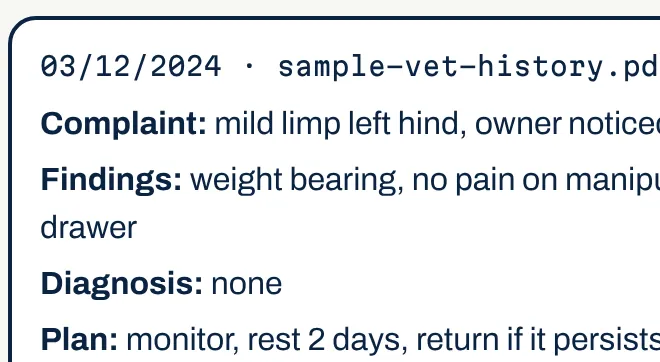
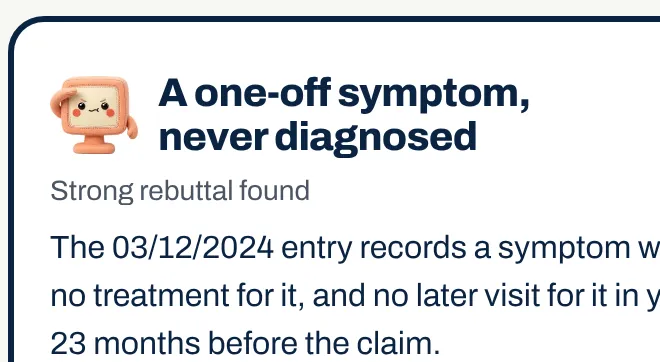
The third test is the one most "single note" denials lean on, and it has a limit built in: the signs have to be directly related to the condition you're claiming for. A note about the left ear doesn't obviously relate to a right knee, and a sudden injury isn't obviously the same condition as a vague symptom months earlier. Under this Act, it's the insurer that has to show the link.
Other protections in the Act
- Unless you've filed a claim, you can return the policy within 30 business days of receiving it for a premium refund, for any reason.Source: New Jersey Legislature, P.L.2025, c.224: the Pet Insurance Act, read November 25, 2026
- Insurers must disclose whether coverage is reduced or premiums increased based on your claim history.Source: New Jersey Legislature, P.L.2025, c.224: the Pet Insurance Act, read November 25, 2026
- The policy must include the Department of Banking and Insurance's mailing address, toll-free number and website.Source: New Jersey Legislature, P.L.2025, c.224: the Pet Insurance Act, read November 25, 2026
- The Commissioner of Banking and Insurance can set and enforce penalties for violations.Source: Insurance Business, New Jersey passes pet insurance act, mandates industry compliance by 2027, read November 25, 2026
The Act doesn't set out its own appeal procedure. In practice that means the same route as before: ask the insurer for its reasons, appeal in writing, and if the decision stands, complain to the Department using the contact details your policy now has to carry.
What to do if you're in New Jersey
- Note your dates. Write down your policy start date, renewal date and the date of the treatment you claimed for. Which rules apply can depend on them.
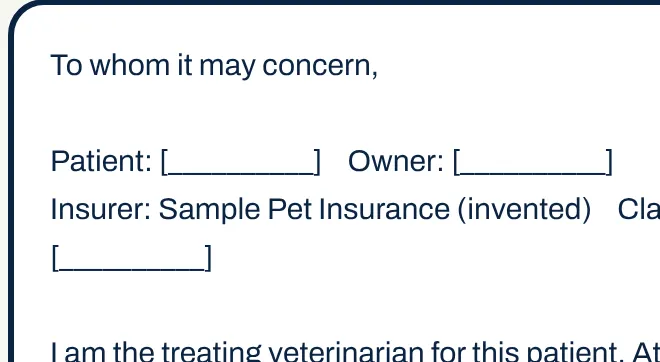
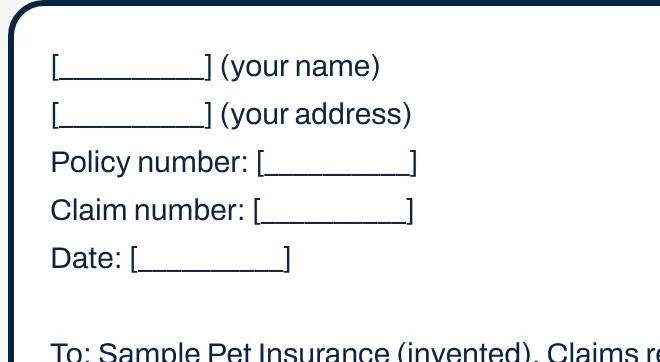
- Ask for the proof. For a pre-existing denial, ask the insurer in writing to identify the record, the date and the part of the definition it relies on.
- Check the link. Read the whole vet visit the insurer quotes. If it was about a different body area, a different side, or a symptom that never led to a diagnosis, say so in your appeal.
- Cite the Act once it applies. For decisions under the Act, point to section 6a: the insurer has the burden of proving the exclusion applies.
- Escalate. If the decision stands, complain to the Department of Banking and Insurance.
Escalation outside New Jersey
- If you're unhappy with how a claim was handled, you can file a complaint with your state department of insurance. The NAIC's consumer guide lists unfair claim denials as a reason to complain.Source: NAIC, How do I file a complaint against my insurance company?, read November 26, 2026
- Each state's insurance department and its complaint page are listed in the NAIC's state directory.Source: NAIC, Insurance department contact information by state, read November 26, 2026
- Under the NAIC Pet Insurance Model Act, the insurer must prove that the pre-existing condition exclusion applies. It's a model law, so check whether your state has adopted it.Source: NAIC, Pet Insurance Model Act (Model #633), read November 26, 2026
What we don't know yet
- Exactly how the Act applies to policies issued before January 1, 2027 that renew after it. Ask your insurer, and the Department if the answer isn't clear.
- Whether the Department will publish guidance or bulletins before the start date.
Was your claim denied?
Upload the denial letter and your vet records. The free check tests the insurer's decision against your records and shows how strong your appeal looks. The appeal packet is US$49, and free if there's nothing worth appealing.
Check my denial freeRelated guides: Trupanion denied your pet's claim as pre-existing? How to appealHealthy Paws denied your pet's claim? How to appealEmbrace denied your pet's claim? How to appealLemonade denied your pet's claim as pre-existing? How to appealWhat counts as a pre-existing condition in pet insurance?Denied because of the waiting period?
More news: Your pet insurance went up. Before you switch, check what you'd loseRegulators now have a playbook for examining pet insurers. Here's why your complaint matters
How we write news: every fact links to the page we read and the date we read it. Lines without a source are our own explanation of those facts. Spotted an error? Email hello@checkmypetclaim.com and we'll correct it and note the change here.
Decision support only, not legal, veterinary or financial advice. You and your vet decide what to send. PetClaimCheck is a self-help tool for preparing your own appeal; it doesn't act for you or contact your insurer or your state. How we keep it accurate.